
Cardiovascular disease remains a leading cause of illness and death across the United States, making effective cholesterol management a critical component of preventive care. While health care organizations recognize the importance of identifying and treating patients at elevated cardiovascular risk, translating clinical guidelines into actionable population health strategies can be challenging. Azara Healthcare and the American Medical Association (AMA) have collaborated on a release of new AMA MAP™ Cholesterol metrics and analytics designed to support data-driven improvement efforts and help organizations better monitor and improve cholesterol care and management.
Supporting Cholesterol Management Through Actionable Analytics
The AMA MAP™ Framework provides organizations with a framework, action steps and strategies to Measure accurately, Act rapidly & Partner with patients to improve cardiovascular health outcomes. Building on this approach, Azara has released the AMA’s two new cholesterol-focused metrics in DRVS, along with a dashboard and scorecard to help organizations monitor performance and identify opportunities for improvement.
AMA MAP™ Low Density Lipoprotein Cholesterol (LDL-C) Screening
The AMA MAP™ Low Density Lipoprotein Cholesterol (LDL-C) Screening metric helps organizations identify patients in need of low-density lipoprotein cholesterol (LDL-C) testing. Regular screening is essential for understanding cardiovascular risk and ensuring patients receive timely follow-up care when elevated cholesterol levels are identified. This measure allows physicians and care teams to monitor their screening performance and uncover gaps in screening across patient populations.
AMA MAP™ Recommended Low Density Lipoprotein Cholesterol (LDL-C) Therapeutic Intensity
The AMA MAP™ Recommended Low Density Lipoprotein Cholesterol (LDL-C) Therapeutic Intensity metric enables organizations to determine if their patients are receiving cholesterol-lowering therapy that aligns with current risk-based treatment recommendations. By understanding treatment performance, organizations can identify opportunities to optimize care and management and reduce cardiovascular risk.
New Analytics for Population Health Teams
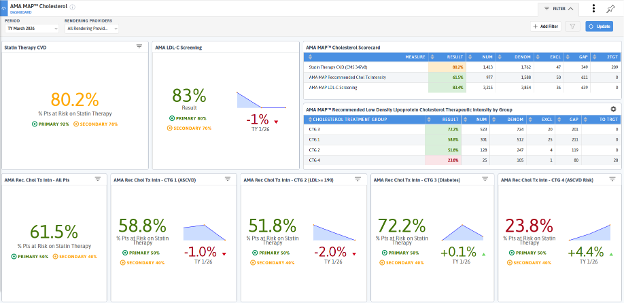
In addition to the metrics, DRVS now includes an AMA MAP™ Cholesterol Dashboard and Scorecard to provide organizations with a comprehensive view of their cholesterol management performance.
These new analytics allow teams to:
- Monitor cholesterol performance trends over time
- Identify patient populations with care gaps
- Compare results across providers, locations, or organizations at the network level
- Track progress toward quality improvement goals
- Support value-based care and population health initiatives
Turning Data into Action
The new AMA MAP™ Cholesterol metrics and analytics can support a variety of clinical and operational workflows. Quality improvement teams can use the dashboard to monitor performance and evaluate interventions. Care managers can identify patients who may need outreach or follow-up. Clinical teams can better understand screening and treatment patterns, while leadership can track organization-wide progress toward optimizing cardiovascular health outcomes.
By delivering both high-level performance views and actionable patient-level detail, these resources help organizations move beyond measurement toward meaningful improvement.
Advancing Cardiovascular Health with DRVS
The addition of the AMA MAP™ Cholesterol metrics, dashboard, and scorecard reflects Azara's continued commitment to providing healthcare organizations with the tools they need to improve health outcomes through actionable analytics. Whether focused on quality improvement, population health, or value-based care performance, organizations now have greater visibility into cholesterol care management and new opportunities to identify and close care gaps.
We encourage DRVS users to explore the new AMA MAP™ Cholesterol tools and begin leveraging these insights to support better cardiovascular health for the populations they serve.
Click here to learn more about AMA™ MAP solutions.
Related Articles

Why Community Trust Is the Foundation of Population Health
Explore Insights
From Delays to Action: How Real-Time Data Transforms Transitions of Care
Explore Insights