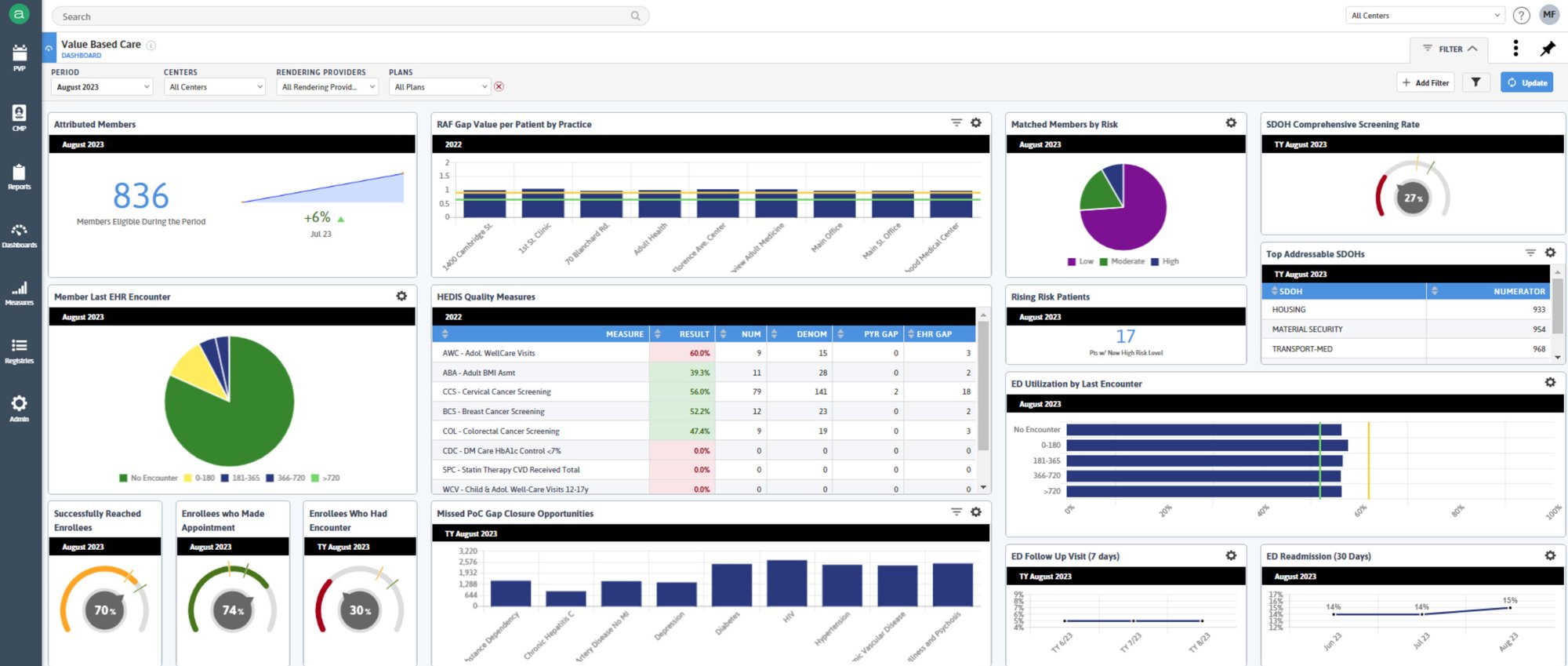
Value-Based Care is a healthcare delivery model that rewards quality, outcomes, and cost efficiency rather than volume of services. Success depends on data-driven insights, proactive care, and strong collaboration between providers and payers.

This enables healthcare organizations to work hand-in-hand with health plans on critical initiatives like engaging attributed members in preventive care, improving clinical quality, capturing risk adjustment factors, and driving performance improvement. By equipping providers with up-to-date actionable information and streamlining risk gap closure and the sharing of supplemental data, Azara fosters a collaborative environment where all stakeholders can work together to monitor, track, and improve quality, cost, and utilization outcomes for the entire patient population.
Azara seamlessly integrates health-plan provided data, such as rosters and claims from multiple plans, within existing workflows. This unified dataset enables member-focused programs to optimize quality measures, close risk and care gaps, and precisely identify and target high-risk patients through risk stratification – all within the unified Azara DRVS platform.
Azara DRVS further supports value-based care success with an experienced Clinical Transformation team and a comprehensive library of over 600 measures – including over 50 certified HEDIS® measures, CMS eCQM measures used for MSSP, MCP, & PCF programs, and a broad range of other clinical quality measures, covering all health plan members.


Unify member insights by aggregating and standardizing supplemental data directly from health plans – empowering care teams with a comprehensive and timely understanding of patients' conditions and risk factors.
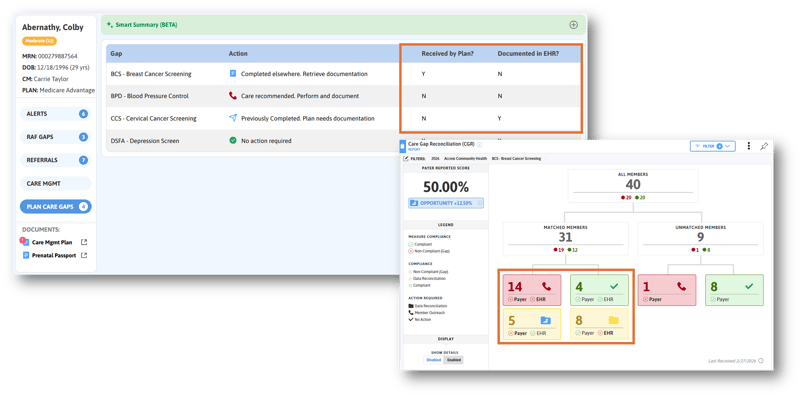
Plug-In Plan Care Gaps surfaces the status of care gaps as reported in the Care Gap Reconciliation (CGR) Report for a given patient, based on records found in the EHR and received from the Payer. This new section can help prompt care team members to document, conduct outreach, and provide the care needed to close gaps and improve measure performance.
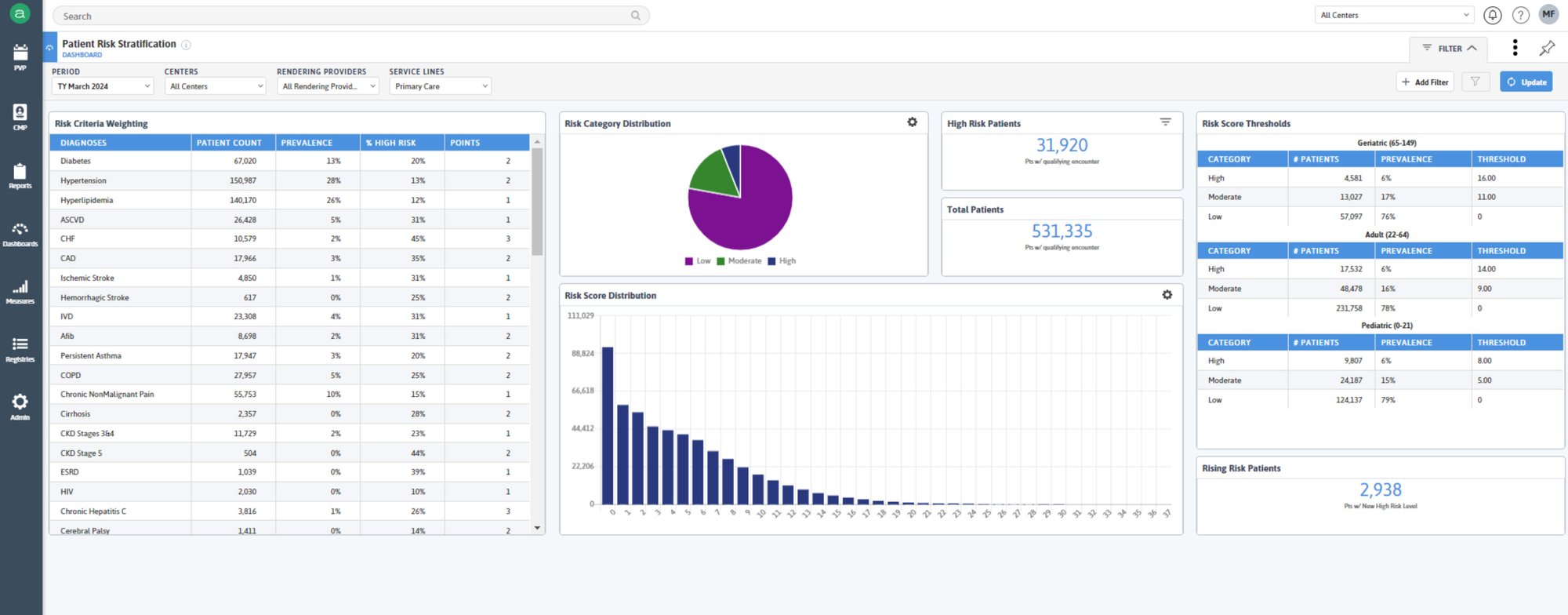
Access real-time risk stratification to continuously identify and address potential member health issues.
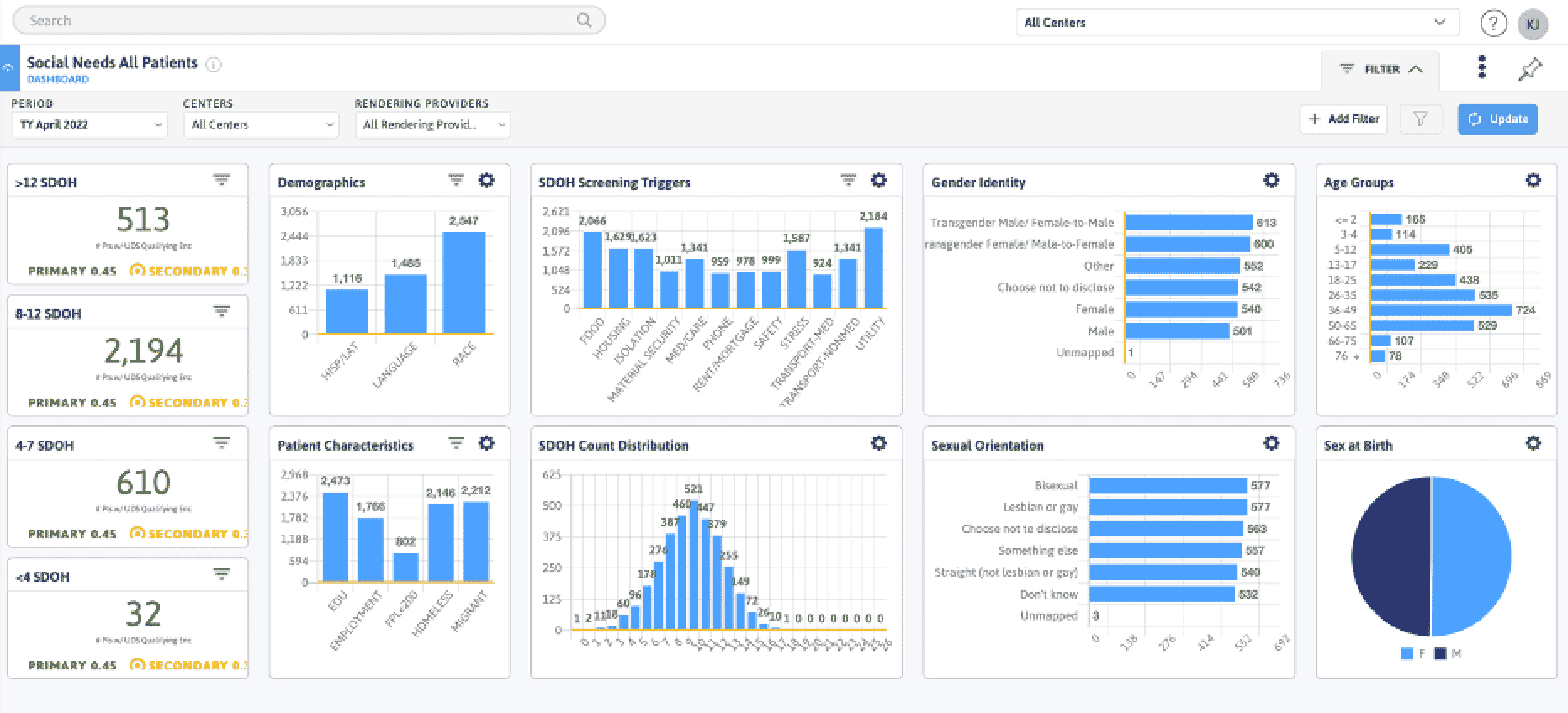
Leverage expanded clinical insights, including social determinants of health (SDOH) and demographics to optimize HEDIS measure performance and facilitate risk recapture.
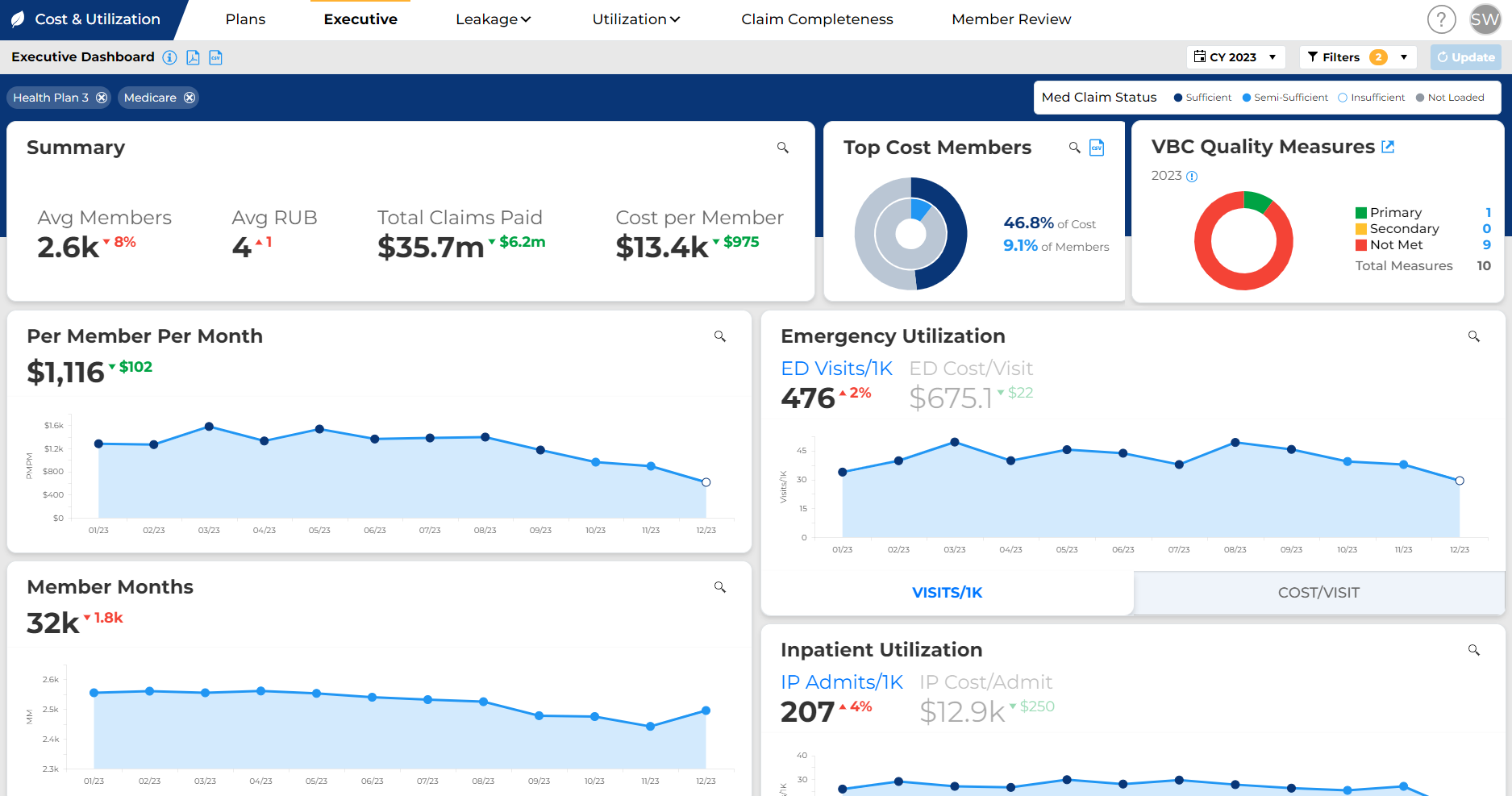
Gain granular insights into cost and utilization drivers throughout the network, enabling targeted interventions to optimize performance at the network, practice, and provider levels.


Azara Healthcare was part of the first cohort organizations which earned Certified Data Stream status in 2021 for NCQA’s Data Aggregator Validation Program - the highest level of certification offered by the National Committee for Quality Assurance (NCQA).
Validated data flows promote trust in aggregated clinical data. They support adoption of value-based contracting by making many of its core features more workable. This also eases the quality measurement load - validated data streams are uniquely accepted as standard supplemental data in HEDIS® audits. This means no primary source verification is required for HEDIS reporting when health plans report data from validated sources.
Validated data flows are an important, early step on the pathway to a digital measurement ecosystem.
Value-Based Care is a healthcare delivery model that rewards quality, outcomes, and cost efficiency rather than volume of services. Success depends on data-driven insights, proactive care, and strong collaboration between providers and payers.
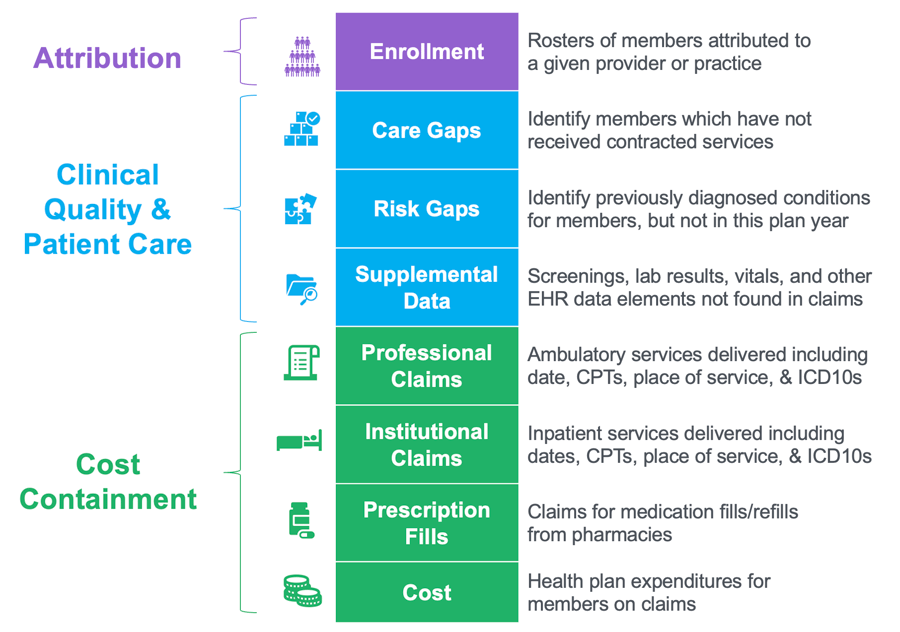
Missed opportunities are often found by analyzing quality gaps, utilization patterns, and attribution data. Azara helps organizations identify where interventions can improve performance and maximize shared savings.
VBC reporting translates performance data into actionable insights for clinical teams. Azara provides timely reports that help teams focus on patients who will benefit most from intervention.
Collaboration improves data sharing, alignment on goals, and care coordination. Azara supports payer-provider collaboration by enabling shared visibility into performance, quality, and utilization metrics.
Even without payer data, organizations can make progress using clinical and utilization data. Azara helps organizations optimize performance with the data they have while supporting future integration of payer information.