In my previous blog, Data as Rural Infrastructure: Building a Shared Health Center–Hospital–Health Plan Data Lattice, I described the data lattice as the structural framework rural communities need to connect health centers, hospitals, and health plans into a coordinated system of care. That lattice is more than a shared reporting infrastructure, it’s the foundation for alignment, accountability, and collective action.
As states prepare to deploy large-scale investments through the federal Rural Health Transformation Program (RHTP), the focus now shifts from building the lattice to activating it. Rural healthcare is entering a defining moment, and transformation at this scale will not succeed through isolated efforts or individual providers alone. The real challenge is orchestration: how networks, associations, and regional leaders can use a shared data foundation to translate funding, technology, and care delivery reforms into measurable, system-wide impact.
Why Network-Led Rural Healthcare Transformation Requires a Shared Data Foundation
Across RHTP applications and implementation plans, a consistent theme has emerged: data and analytics are foundational to rural health transformation. States are prioritizing interoperability, reporting infrastructure, and population health insight that can scale across regions—not just within a single clinic or hospital.
For networks, this means moving beyond point solutions and fragmented reporting. To oversee progress, identify gaps, and guide improvement, network leaders need a unified, trusted view of performance across their member organizations. Without that shared visibility, even well-funded initiatives risk becoming disconnected and difficult to sustain.
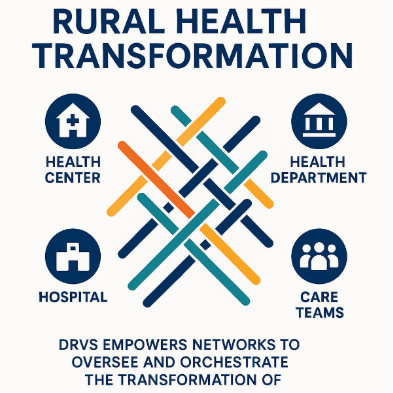 This is where Azara DRVS plays a critical role. DRVS empowers rural healthcare networks to move from passive oversight to active orchestration. By integrating clinical, claims, behavioral health, and social drivers of health data across disparate systems, DRVS creates a single source of truth that network leaders and their members can rely on.
With Azara DRVS, networks can:
- Monitor performance across sites and regions using standardized, comparable metrics
- Identify population-level risk and care gaps that require coordinated intervention
- Support member organizations with actionable insights, not just reports
- Scale successful initiatives consistently across rural communities
Instead of asking each provider to navigate transformation independently, DRVS enables networks to align strategy, resources, and execution while respecting local workflows and autonomy.
Reducing Burden While Strengthening Accountability
Rural transformation is not just about innovation, it’s about sustainability. Networks are increasingly tasked with supporting workforce-constrained providers facing growing reporting requirements, program accountability expectations, and value-based care readiness.
DRVS helps networks protect frontline capacity by automating quality measurement and program reporting across member organizations. This reduces duplicative effort, minimizes manual work, and helps ensure consistent submission of accurate, timely information.
At the same time, DRVS strengthens accountability. Network leaders gain confidence that transformation dollars are tied to outcomes, progress can be tracked transparently, and results can be demonstrated to state agencies and funding partners.
Orchestrating the Shift to Value-Based Rural Healthcare
The RHTP signals a broader transition toward value-based payment models in rural healthcare—models that reward coordination, prevention, and equity. Networks are central to making this transition achievable at scale.
DRVS equips networks with the analytics infrastructure needed to:
- Track quality and utilization across payers and programs
- Support risk stratification and proactive care management
- Align clinical, quality, and leadership teams around shared goals
- Move member organizations from compliance-driven reporting to confident, data-driven performance
With the right data foundation, networks can guide rural providers through value-based transformation deliberately, equitably, and at pace.
Turning Investment into Coordinated Impact
Rural healthcare transformation is not a one-time initiative. It is a long-term strategy that requires sustained coordination, visibility, and learning across organizations and communities.
Azara DRVS is purpose-built to support that mission by empowering networks to oversee progress, orchestrate change, and ensure that rural healthcare investments deliver lasting impact where they matter most.
To learn more about how data-driven networks are shaping
the future of rural healthcare, download our eBook:
Transforming Rural Healthcare with Data-Driven Innovation
Related Articles

From Funding to Transformation: 4 Solutions Helping Rural Healthcare Organizations Achieve RHTP Goals
Explore Insights
Why Community Trust Is the Foundation of Population Health
Explore Insights