
While Medicaid Redetermination has become a standing operational reality, existing processes are set to be impacted. With states preparing to move to six-month redetermination cycles starting in 2027, the pressure on safety-net providers will only intensify. What was once an annual effort is quickly becoming a continuous undertaking; one that demands structure, visibility, and sustainability.
Across community-based care, leaders are seeing the same challenges play out. Patients continue to lose coverage, not because they’re ineligible, but because renewal notices are missed, documentation timelines are unclear, or follow-up efforts are fragmented across teams. The consequences ripple quickly: disrupted care plans, missed preventive services, declining quality performance, and increased financial risk under value-based care models.
This is where Azara DRVS and Azara Care Connect play a critical role.
Operationalizing Medicaid Redetermination at Scale
Azara CareConnect (ACC) was built for challenges like this: when knowing which patients are at risk is only the starting point. Powered by Azara DRVS, ACC translates insight into action by assisting care teams with bringing listed Medicaid redetermination criteria directly into everyday workflows, so they can operate proactively rather than reactively.
Instead of managing redetermination through spreadsheets or one-off tracking tools, ACC enables structured worklists and workflows that guide outreach across navigators, care managers, and enrollment staff. Patients due for renewal appear in prioritized queues, while reminder functionality helps ensure follow-ups happen on time, an essential capability as redetermination moves toward twice-yearly cycles. The work becomes repeatable and manageable.
ACC also provides a centralized way to track and document every outreach effort. Calls, texts, mailings, and in-person assistance are captured in one place, creating continuity across staff and sites. This level of documentation is increasingly important as Medicaid oversight grows and organizations must demonstrate not just effort, but execution and follow-through.
Azara Tools to Support Medicaid Redetermination
Leveraging tools in Azara DRVS and ACC, users can focus outreach on their Medicaid population. In DRVS the Medicaid Redetermination Upcoming or Overdue measure pulls members in a Medicaid plan who have an upcoming or past date for redetermination and moves them into ACC automatically, streamlining intentional outreach for patient compliance. In addition to outlining those in need of outreach for redetermination within ACC, this measure can analyze the population to determine areas of opportunity and trends right within DRVS.
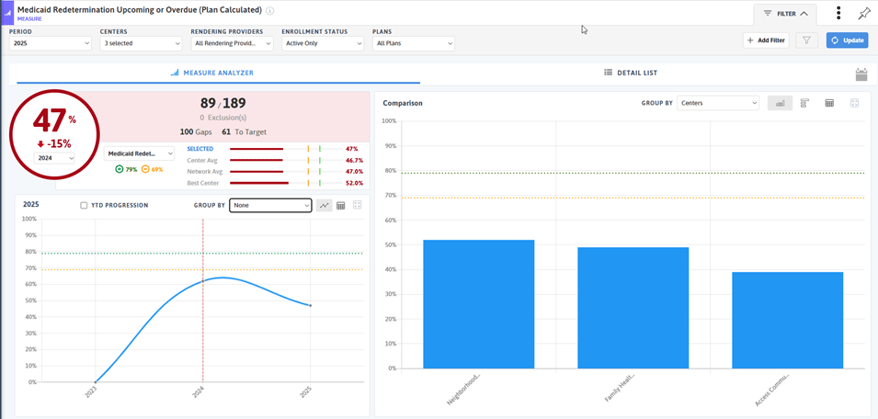
When the population is identified, prioritization and outreach can begin within ACC. Care coordinators, navigators, care managers, and enrollment staff can align their efforts around patients who still need Medicaid redetermination support, helping organizations close gaps and maintain coverage at scale. Using ACC’s Patient Directory, users can filter the list of patients to those with redetermination dates coming soon or already overdue.
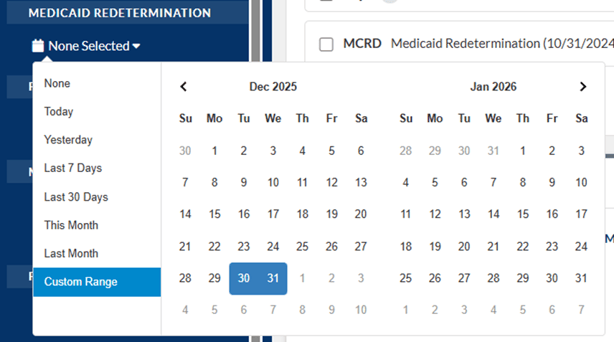
By using the date range filter, care teams can ensure they are reaching out to the right patients at the right time. For those more focused on redetermination along with other gaps in care, ACC also allows for filtering of other open outreach reasons to tailor the list of patients even further.
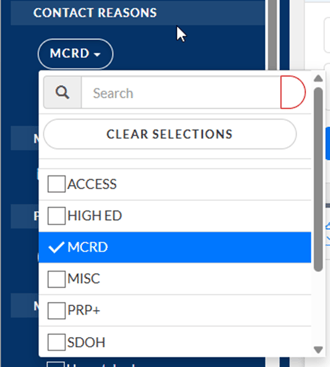
By filtering for specific Medicaid redetermination dates or related care gaps, organizations can clearly identify priority populations and drive focused, impactful outreach that advances health center and network re-enrollment initiatives. ACC not only makes prioritizing patients for outreach easy and trackable, but it also streamlines outreach documentation. When a patient is identified, users can navigate to their ACC record by selecting the patient.
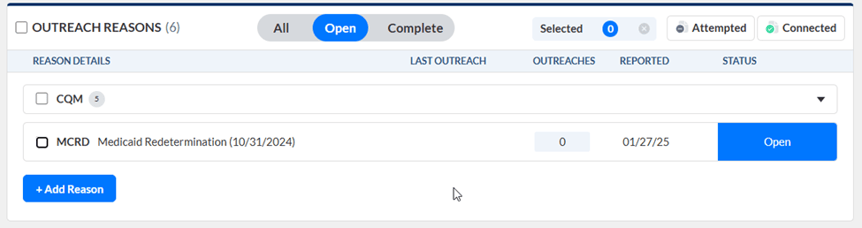
On the Coordination tab of a patient record in ACC, users can also review open active care gaps, such as Medicaid redetermination, and log outreaches specifically for them. Whether connected with the patient or not, outreach details can be documented, leading to care gap closure and activity tracking for those within the population. In addition, ACC makes setting follow-ups straightforward when further outreach attempts are required.
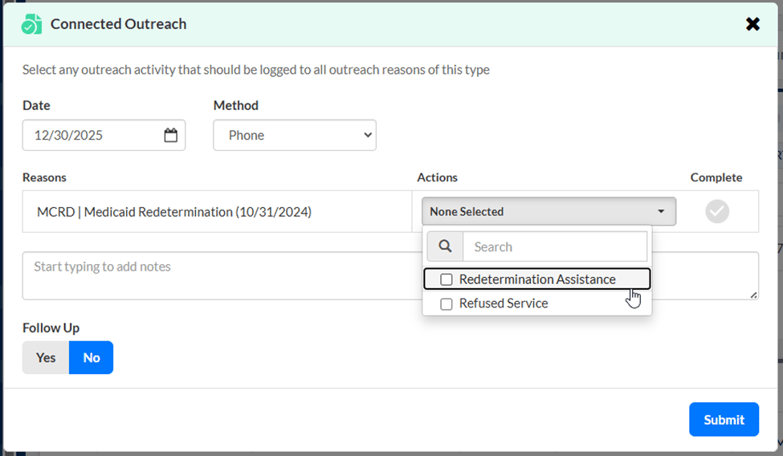
Actions taken on individual patients with redetermination needs can then be tracked in ACC using the Coordination Activity Report. This report focuses on all outreaches documented in ACC and can be filtered by specific outreach reasons (gaps) and whether they have been completed in ACC or not.
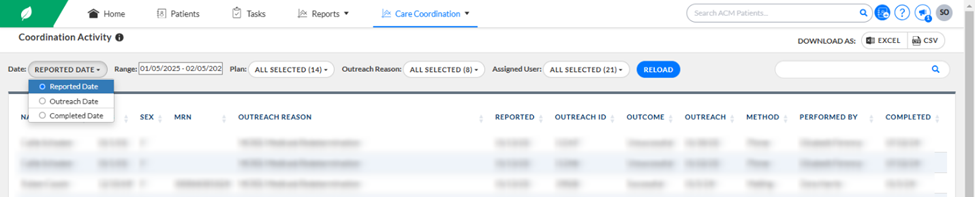
This report enables organizations to evaluate performance on gaps such as Medicaid redetermination, identify trends over time, and uncover areas of opportunity. At the network level, these insights can be used alongside the Measure Analyzer to pinpoint where gaps persist and assess whether outreach efforts are effectively supporting Medicaid re-enrollment. Together, these capabilities help organizations take a more data-driven approach, an increasingly critical advantage as Medicaid redetermination continues to evolve for safety net providers.
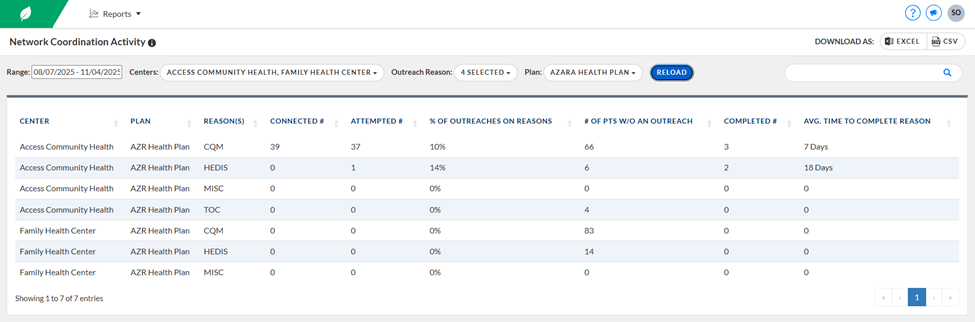
For leadership, ACC delivers the visibility needed to manage redetermination as a core operational function. Reporting tools show how outreach is performing across populations and locations, where patients are falling out of the process, and how coverage continuity affects visit volume, quality measures, and the bottom line. Redetermination stops being an invisible drain on resources and becomes something leaders can actively manage and improve.

Azara Impact
The impact of this approach is already proven at scale. During California’s historic Medicaid enrollment and renewal push, the California Primary Care Association partnered with Azara to coordinate outreach across nearly 100 clinics and regional associations. ACC helped unify workflows, track engagement, and demonstrate results, supporting hundreds of thousands of enrollments and re-enrollments during an unprecedented period of policy change.
> View Case Study
As Medicaid policies continue to evolve, one thing is clear: redetermination is no longer a periodic administrative task. With six-month cycles on the horizon, it must be embedded into the fabric of care coordination, quality improvement, and financial strategy.
For safety net providers, Azara DRVS and ACC offer a way forward, connecting data to action, outreach to outcomes, and coverage stability to long-term value-based care success. In a landscape defined by change, connected workflows aren’t just helpful, they’re essential.
Want to learn about Azara Care Connect? Contact your client success manager or email solutions@azarahealthcare.com.
Related Articles

From Delays to Action: How Real-Time Data Transforms Transitions of Care
Explore Insights
On Time vs. Fully Vaccinated: Rethinking Childhood Immunization Gaps
Explore Insights